
VIP Notifications are short, personalized emails that InGo sends to your event participants. Each email shows the participant a preview of their own social post and a button to share it in a few clicks.
These are one of the most effective ways to grow your advocates. Across InGo events, VIP Notifications typically drive around a third of all results, and they work especially well for speakers, sponsors, and exhibitors.
How VIP Notifications Work
- Who receives them: participants in your InGo groups, whether uploaded, synced from your registration platform via API, or registered through InGo.
- When they're sent: on the dates in your schedule. Every event starts with a default schedule (see Understanding Your VIP Notification Schedule).
- When they stop: once a participant shares a post, they stop receiving VIP Notifications for that event. If you update the post graphic or text, participants who already shared can receive them again.
- Who they come from: info@ingo.me by default, or your own domain. Request a custom domain with the Customize Sender Information form (see Updating Sending Details and Your Sender Domain).
- Opting out: every email includes an unsubscribe link. Recipients can unsubscribe from that event or from all events in your community.
- Compliance footer: add your organization's legal and privacy details to every VIP Notification. See Updating the Footer on Your VIP Notifications.
Step 1: Open Manage Emails
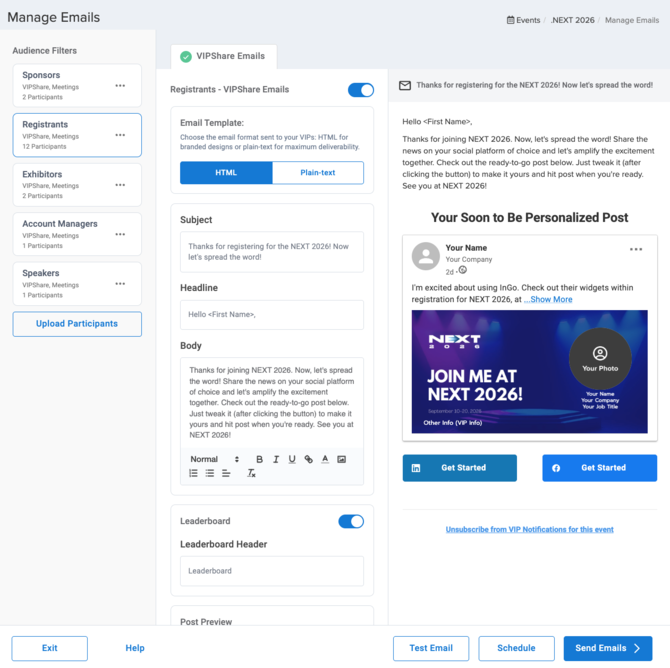
On your event's Event Summary page, click Manage Emails in the top-right. The page has three areas: Audience Filters (your groups, on the left), the email editor (middle), and a live preview (right).
Step 2: Configure Each Group's Email
- Select a group under Audience Filters.
- Make sure the VIPShare Emails toggle is on for groups that should receive emails, and off for groups that shouldn't.
- Choose an Email Template: HTML (branded, with the full post preview) or Plain-text (looks like a personal note, best deliverability). If your organization sets the template in Growth Reports, that choice applies to your event.
- Edit the Subject, Headline, and Body. Placeholders like <First Name>, <Last Name> are filled in for each participant.
- Turn the Leaderboard on or off.
- Under Post Preview, edit the Header and Button Text. Keep button text short, for example "Get Started".
Step 3: Send a Test
Click Test Email, to send yourself and/or a teammate a test through the Send Test Email button.
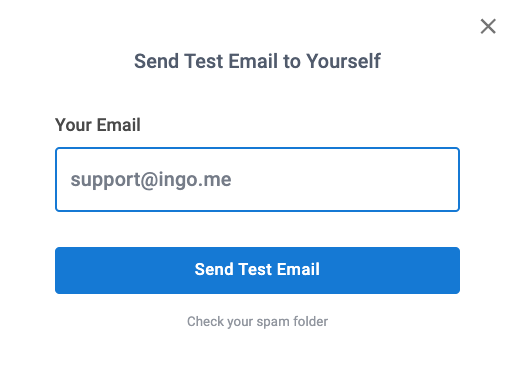
Test emails use placeholder details instead of real participant data. You'll see a greeting like "Hi InGo Admin User", and the post preview shows "Your Name", "Your Company", "Your Job Title", and a "Your Photo" placeholder. Use the test to check your subject line, wording, graphic, buttons, and layout.
Step 4: Review Your Schedule
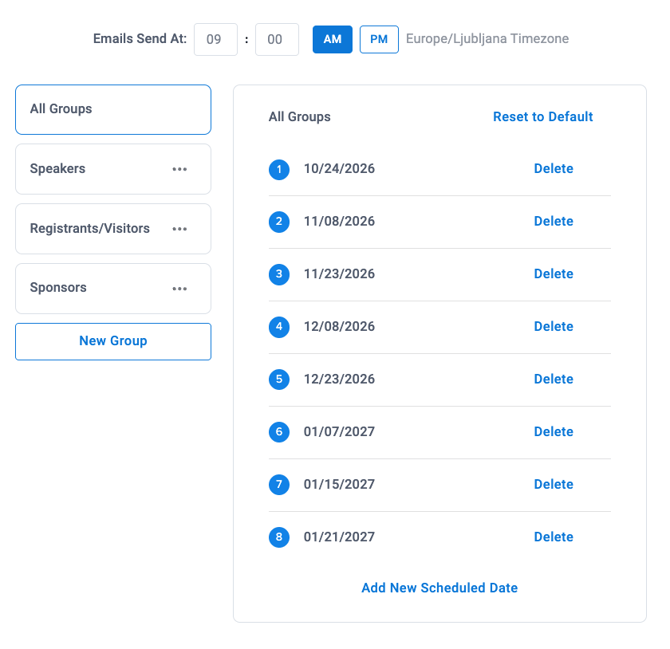
Click Schedule in the bottom-right to see and change when emails go out. Set the send time, then add or remove dates for All Groups or for individual groups, and click Save. Full details are available in: Understanding Your VIP Notification Schedule.
Step 5: Send Now (Optional)
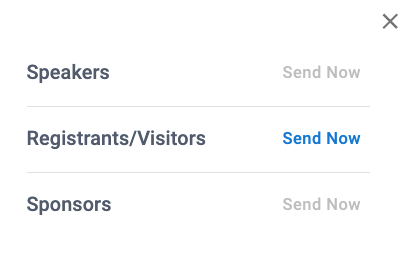
Click Send Emails, then Send Now next to a group to send immediately. There is no confirmation step, and sent emails can't be recalled.
Launch Checklist
- Every group that should receive emails has a desired configuration: post graphic, post text, etc.
- The VIPShare Emails toggle is off for groups that shouldn't receive emails (internal staff, test groups, suppression groups).
- Your lists are clean: no test registrations or people who haven't registered.
- If you sync via API, your group mapping puts each registration type in the right group.
- Headshot and logo URLs are publicly accessible (not Google Drive links).
- You've sent a test and reviewed the schedule, including anything under All Groups.
Best Practices
- Start early. The default schedule begins 90 days out, so add participants as early as you can.
- Give speakers, sponsors, and exhibitors their own groups and messages. They have the largest, most relevant networks.
- Keep the sends close to the event. The final weeks often perform best.
- Customize content. Custom content vs default often brings better results. Tailor the subject, body, and other content to each group.
- Refresh your content to give participants a new reason to share.
- Send from your own domain so participants recognize the sender. Request it with the Customize Sender Information form.
Related Articles
- Understanding Your VIP Notification Schedule
- How to Check if Your VIP Notifications Were Sent
- Troubleshooting VIP Notifications
- Managing VIP Notification Requirements from Growth Reports
- Updating Sending Details and Your Sender Domain
- Updating the Footer on Your VIP Notifications
- How to Remove Participants